
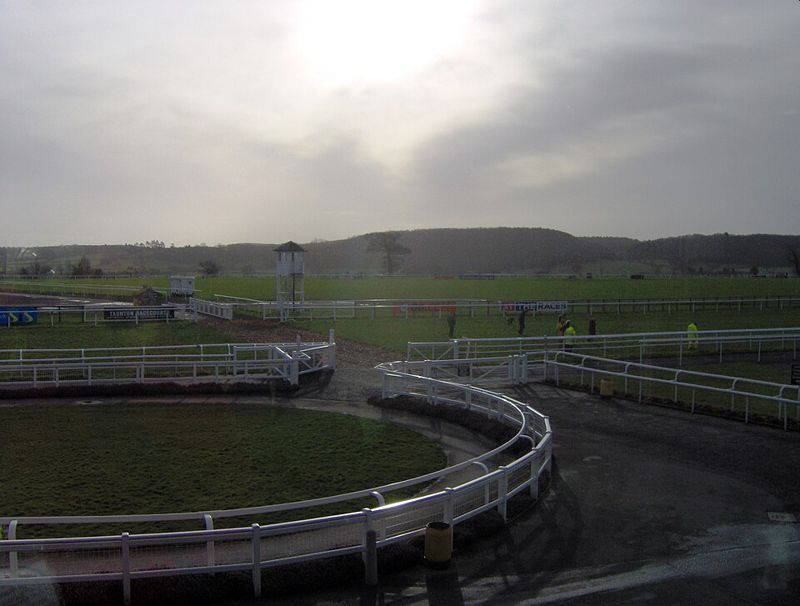
Taunton confirmed on the 20th of August that it will resign from the Racecourse Association at the end of the year, which is the third British racing organisation to walk out on the trade body in four months. Taunton follows Ascot, who confirmed their departure in May, and the Jockey Club, which owns 15 racecourses, earlier in August.
Three big departures in one summer might look like a united revolt against how racing governs itself, but the truth is that they’re not working together. Each left on their own terms and none of them have combined with the others.
Image – Rod Ward, Public domain, via Wikimedia Commons
Issues for the Racecourse Association
The trouble that racing now finds itself in can be traced back to the third of March, when Lord Allen resigned as the Chair of the British Horseracing Authority after six months in the role. That was what prompted Ascot, the Jockey Club and other big independents to demand governance reform. Ascot’s Chief Executive, Felicity Barnard, gave notice on the fourth of May, saying that ‘sufficient progress has not been made.’ The RCA’s review arrived on the first of August, replacing one-course-one-vote with four voting blocs, which was enough for York, Goodwood and Newbury, but not for the Jockey Club.
As a result, the Jockey Club followed the others out of the door on the third of August, with its Chief Executive, Jim Mullen, arguing that courses of ‘such different economic models with such different timespans’ could never reach ‘a singular position’ through one body, saying that he would look to build his own coalition of ‘like-minded’ tracks instead. That coalition numbers exactly one course beyond its founder. Mullen said this month the Jockey Club was ‘currently speaking with Ascot’, proof that the two courses whose complaint began the review have not yet formed one voice.
A Fractured Sport
Taunton, on leaving, said that it had had no contact with the Jockey Club and would deal with the BHA and the Levy Board on its own account. Arena Racing Company, whose 16 courses are built for the betting shops rather than the paddock, took Chelmsford’s all-weather track in July, which was the very asset that the Jockey Club needed against it, the same summer it cut 30 jobs. RCA Chief Executive, Alex Eade, called it a moment when the sport chose to ‘tear ourselves apart’ rather than unite behind its incoming chair, Simon Cox.
Racing is not watching a trade body lose a rebel alliance, however. Instead, it is watching three of its biggest names walk out through the same door and go three different ways. It means that racing is not so much coalescing around two different groups, wrestling for control of the sport’s future, but rather splintering in a way that is likely to have profound long-lasting consequences. In the short term, the watching public is unlikely to notice much difference when it comes to the races. In the long term, the very sport could be under threat.